What the projection lights
The unfinished domes
Why the upper domes of Westminster Cathedral are bare brick, what the finished chapels look like, and how the 360° show works with both.
Book a seat under the domes ↗Quick answer
The interior of Westminster Cathedral is unfinished by design. Bentley planned marble below and mosaic above, but the upper domes were never covered and stay dark brick. Chapels were completed in mosaic over the decades. The 360° show lights both: it projects across domes, mosaics and columns, and shows how the domes might have looked.
Marble below, mosaic above
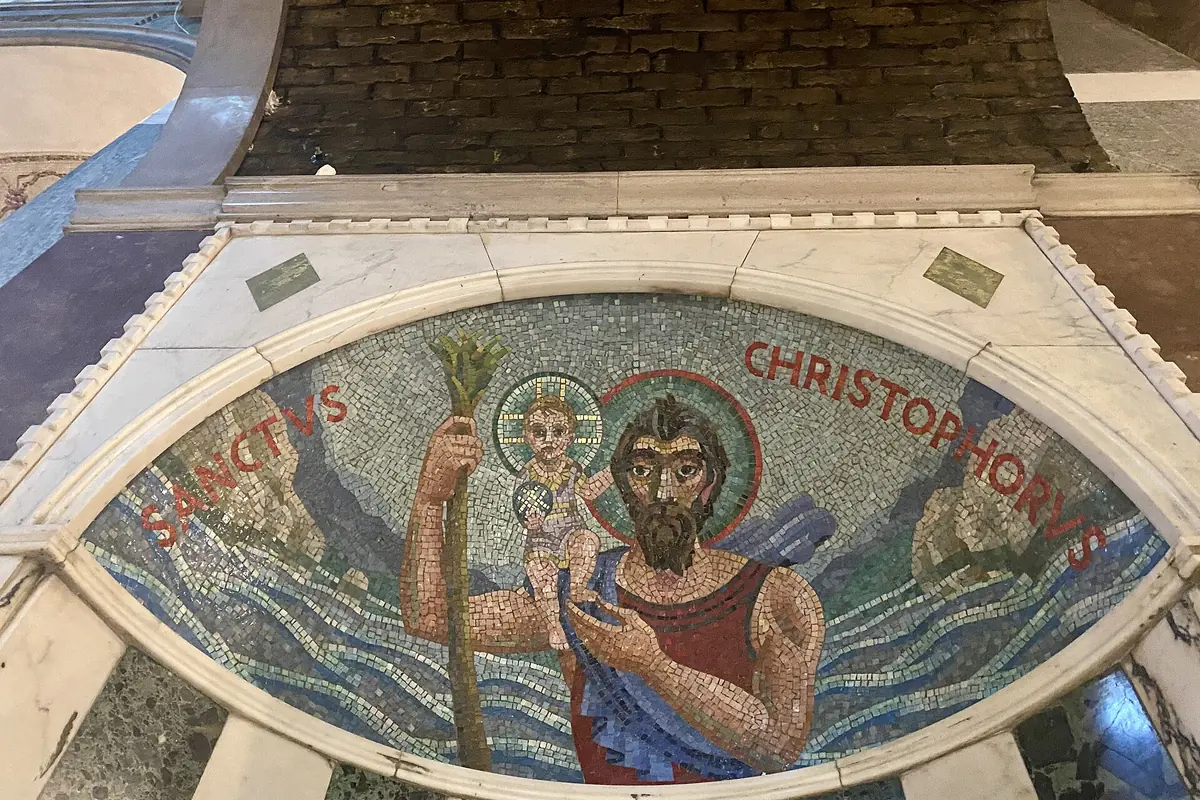
Bentley wanted the lower reaches of the cathedral clothed in marble and the upper reaches covered in mosaic. He died before he could leave a complete set of instructions, so later generations have interpreted his vision. The cathedral says the interior is unfinished, that it was always meant to be completed gradually, and that the work continues today. The marble largely followed his specification in his lifetime. The mosaic took far longer, and most of the upper church is still waiting for it.
The dark upper church
The roof spaces are dark, with a century of soot and candle smoke blackening the brickwork. The cathedral was built for electric light, and the nave pendants erected in 1909 recall the metal lamp holders of Hagia Sophia. Press accounts of the show say the ceilings and upper columns were left bare for over 120 years because funds ran short. From the nave it can be hard to read the domes at all, which is why a projection show is a way to see them.
Chapels in mosaic
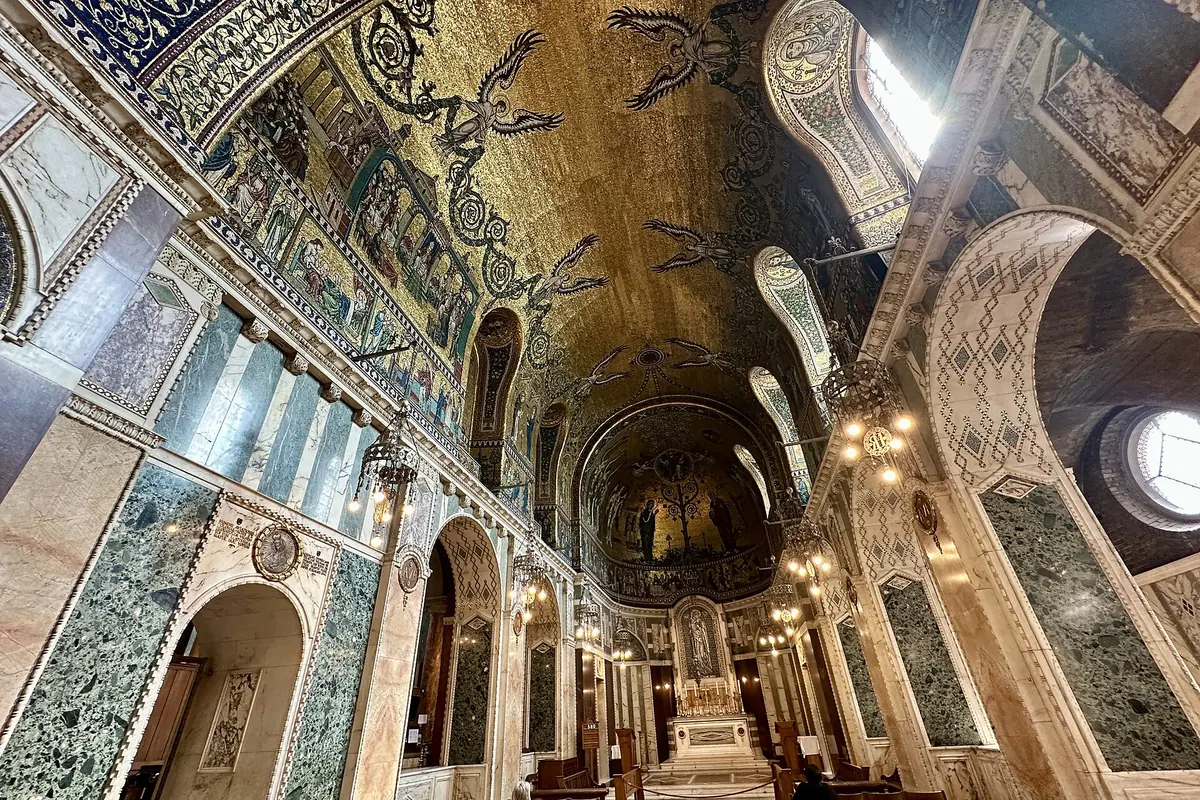
The finished chapels are bright. Boris Anrep designed the mosaics of the Blessed Sacrament Chapel and St Paul's Chapel, Tom Phillips and Christopher Hobbs worked on other chapels, and Gilbert Pownall designed the Lady Chapel mosaics, which include references to Tower Bridge and the Tower of London. The only chapel that truly represents Bentley's own style, says the cathedral, is the Holy Souls Chapel, with Art Nouveau themes. Hand-laid mosaic shimmers more than the modern indirect method, which the cathedral says Bentley would have thought utterly flat and lifeless.
Marble from 24 countries
Over 100 varieties of marble decorate the interior, from 24 countries, including formations quarried by the ancient Greeks and Romans. The yellow columns of the baldacchino over the high altar came from Verona, and their green pedestals from Thessaly in Greece, the same marble found in Hagia Sophia. Some stone is English, such as Derbyshire fossil marble and the Hopton Wood limestone used for the Stations of the Cross. These are the surfaces that the projection can pick out at lamp level.
The Rood and the Stations
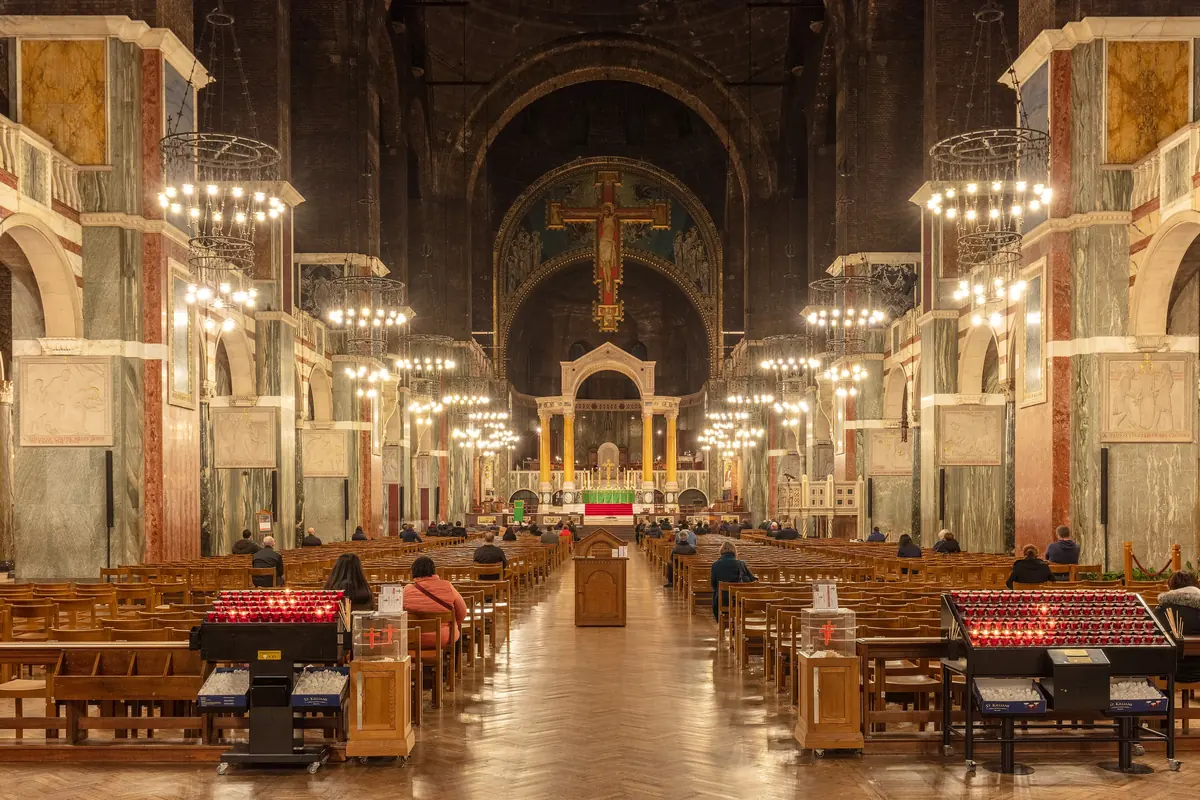
The Rood Cross, thirty feet high and carved in Bruges to Bentley's design, dominates the nave. On the piers are Eric Gill's fourteen Stations of the Cross, in low relief in Hopton Wood limestone, commissioned in 1913 and dedicated on Good Friday 1918. The cathedral says they are best seen early or late in the day, when shadows lift the detail. Gill called them a statement without adjectives. In an evening show the lamps and projection do the work of shadows.
How the show uses the walls
The show projects video in 360 degrees across the domes, mosaics and columns, and its producers describe using digital modelling to show how the unfinished domes and upper columns might have looked if completed. Guests describe lights that follow the music, and a spoken history that links the building to London's story. The evening works because the cathedral is incomplete: there is bare brick for light to turn into pattern. Guests single out how the projected images, the choir and the commentary combine, and one describes the sequence on the Blitz as especially well portrayed.
Who this isn't for
Anyone wanting a chapel-by-chapel tour needs the cathedral's own pages. The cathedral publishes that, and offers its own guided tours. It also does not promise any particular image in the show, since the projection belongs to the producers and may change. The cathedral's own pages go much further on its art and its marbles.
Frequently asked questions
Why are the domes bare brick?
The cathedral was built structure first, with decoration to follow, and the mosaic Bentley planned for the upper reaches was never laid. The cathedral says the work was always meant to be completed gradually.
Does the show cover the whole interior?
Press accounts describe projection across the domes, mosaics and columns. Which images appear where is up to the show.
Sources